You’re offline, but every Efiwe page you’ve loaded — including this one — is still available.

Efiwe Now Caches Your Entire Learning Journey the Moment You Arrive

Efiwe has always been built around a simple conviction: that where you live should never determine what you can learn. With that conviction has come years of investment in offline functionality; from on-device AI feedback to offline translation. Today, that investment takes its most ambitious step yet. Efiwe has launched a major upgrade to how its offline experience works. Previously, a learner had to visit a page while online before they could return to it offline. Miss a page, and it simply wasn’t there when the internet dropped. It was a reasonable system, but it put the burden on the learner to remember to visit every corner of the platform before going offline; something that, in practice, almost nobody does.
Efiwe Extends Its Translation Engine Across Its Open API, SDK, and Messaging Bots

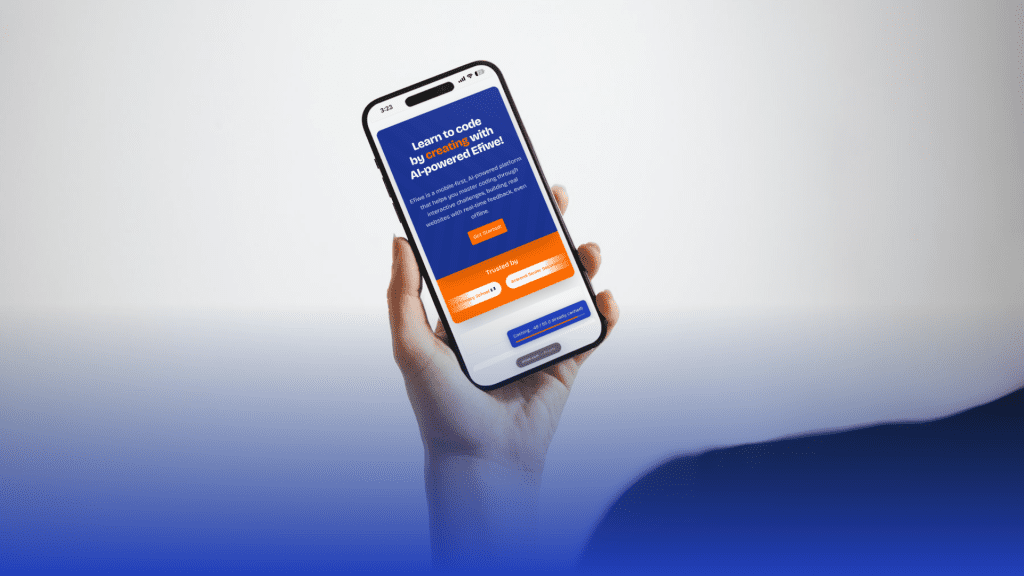
Efiwe already supports 189 languages on its core platform, serving over 10,000 learners across 121 countries. Until now, however, that language support was limited to the main web application. Partners embedding Efiwe challenges through the Open API, developers using the JavaScript SDK, and learners accessing Efiwe through WhatsApp or Messenger received challenge content, AI feedback, hints, and diagnostic messages only in English. This update closes that gap entirely, bringing the same native-language experience that Efiwe’s direct users already have to every platform and integration where Efiwe runs.

Efiwe 1.5 Introduces Smarter, More Human-Like Feedback, Fully Offline

The mobile-first coding education platform takes a major leap forward in AI-powered learning, upgrading its on-device intelligence to not just detect errors, but explain why they happen, even without internet access. Efiwe, the mobile-first coding education platform, has launched Efiwe 1.5, a significant upgrade to its offline AI system that makes coding feedback dramatically more precise, contextual, and human-like. For the first time, learners don’t just see that something is wrong; they get insight into why it’s likely wrong, whether it’s a typo, a unit mix-up, a number slip, or a simple operator confusion.

Why Efiwe Matters in the Age of Vibe Coding

The rise of AI in software development does not make coding education obsolete. If anything, it raises the stakes. As AI-generated code becomes more common, the ability to read, evaluate, and reason about that code becomes more valuable, not less. The developers who will thrive in this environment are not those who can write the most prompts. They are the ones who understand what comes out the other side. AI lowers the barrier to writing code. Efiwe lowers the barrier to understanding it. As long as understanding matters, and it absolutely does, Efiwe remains not just relevant but essential.

Efiwe Shortlisted for the 2026 Africa Prize for Engineering Innovation

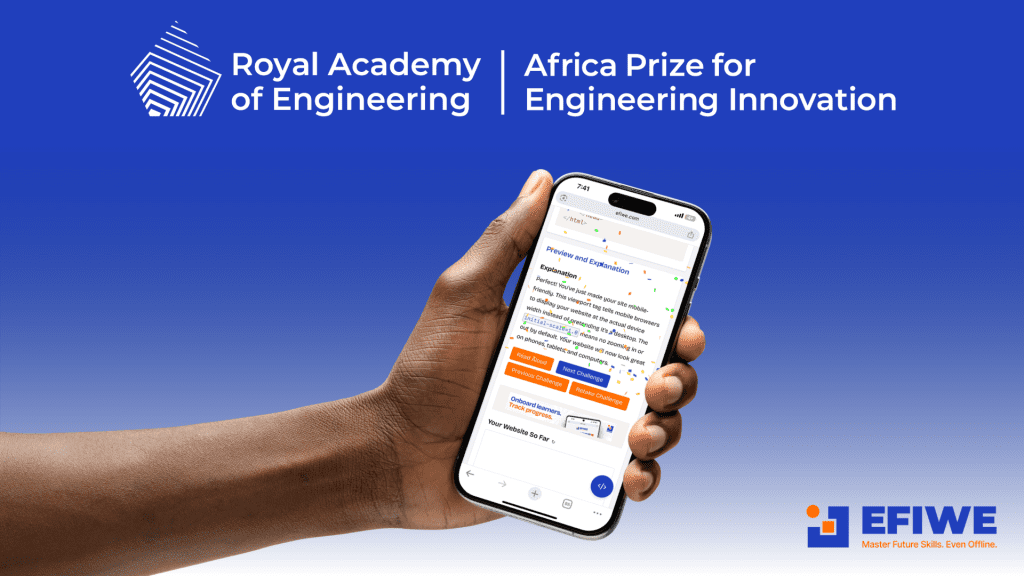
The Royal Academy of Engineering has shortlisted Efiwe for the 2026 Africa Prize for Engineering Innovation, recognising it as one of the most impactful engineering solutions on the African continent. Efiwe joins 15 other innovators from Ghana, Kenya, Lesotho, Malawi, Niger, Rwanda, Senegal, South Africa, Tanzania, and Zambia (including innovations in mobile dialysis, AI-powered cardiac screening, clean water access, smart agritech, and renewable energy) in competing for a share of the £85,000 prize fund. The winner receives £50,000, with three runners-up each awarded £10,000.

Efiwe Brings Its Coding Challenges to Facebook Messenger and WhatsApp

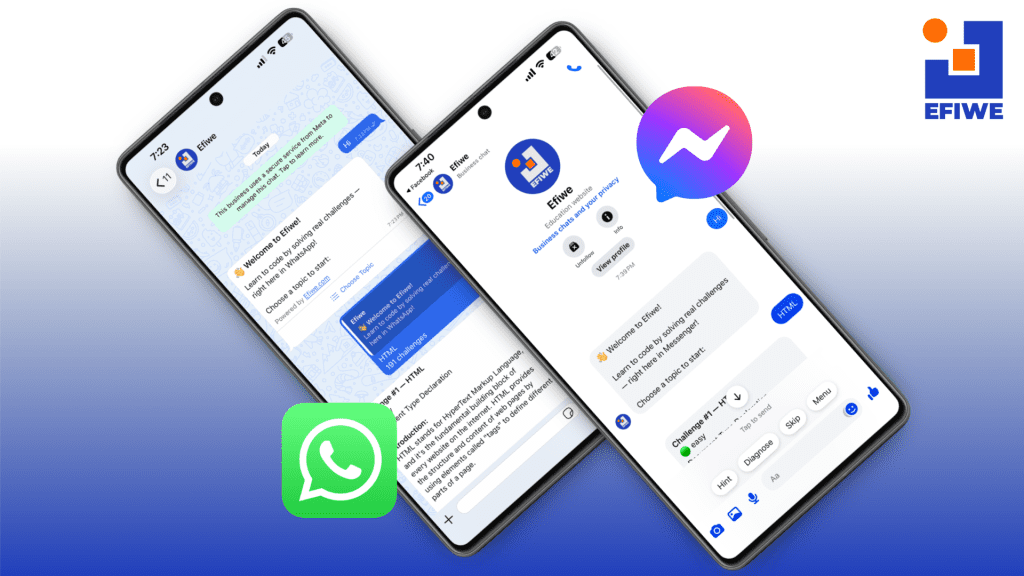
Efiwe, the mobile-first coding education platform serving over 10,000 learners across 121 countries, has extended its learning experience to Facebook Messenger and WhatsApp, allowing anyone to learn to code without leaving their favourite messaging app. Starting today, users can simply send a ‘hi’ message to the Efiwe Facebook Page or WhatsApp Business number and immediately begin solving real coding challenges, receiving AI-powered hints, and getting instant feedback on their code, all within the same interface they already use to chat with friends and family.