

Efiwe, the mobile-first coding education platform takes offline learning to its logical conclusion; ensuring that a single page visit is all it takes to unlock the entire platform, no internet required.
Efiwe has always been built around a simple conviction: that where you live should never determine what you can learn. With that conviction has come years of investment in offline functionality; from on-device AI feedback to offline translation. Today, that investment takes its most ambitious step yet.
Efiwe has launched a major upgrade to how its offline experience works. Previously, a learner had to visit a page while online before they could return to it offline. Miss a page, and it simply wasn’t there when the internet dropped. It was a reasonable system, but it put the burden on the learner to remember to visit every corner of the platform before going offline; something that, in practice, almost nobody does.
That limitation is now gone.
Visit once. Access everything.
From today, the moment a learner lands on any Efiwe page (the homepage, a course page, a blog post, anything), the platform quietly begins preparing every other page for offline use in the background. No prompts, no manual downloads, no configuration. By the time a learner finishes reading their first page, the rest of the platform has already been packaged and stored on their device, ready to be accessed with or without an internet connection.
This means a learner in Lagos who opens efiwe.com on a strong connection at a café can close their laptop, board a bus, lose their signal entirely, and still navigate to every course page, blog articles, and dictionary pages they have never once opened before. The platform is simply there; complete and fully functional.
Built for the way real learners actually move
What makes this update quietly radical is how well it understands real-world behaviour. Most users don’t methodically click through every page of a platform while they have good internet. They land somewhere, do what they came to do, and leave. Efiwe now works with that behaviour rather than against it.
The caching is intelligent, not indiscriminate. It prioritises actual page content (lessons, challenges, dictionary entries, blog articles) alongside the fonts, styles, and scripts each page needs to render properly. Images load. Text is styled. Everything looks and works exactly as it would online. For learners on devices with limited storage, the system is also smart enough to skip what it has already saved and only refresh pages that are more than a month old, avoiding unnecessary re-downloads on every visit.
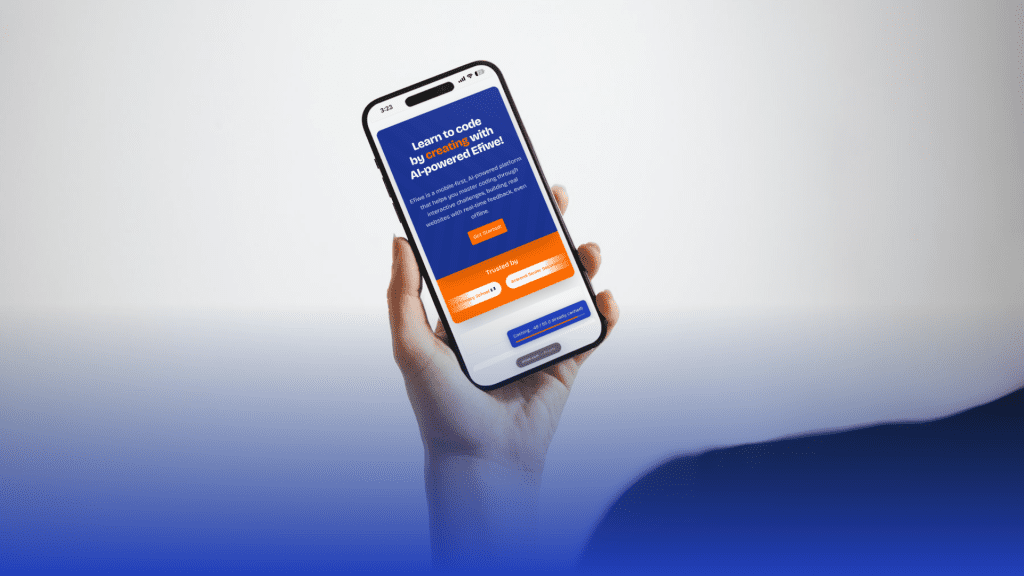
Efiwe also keeps learners informed. A small, unobtrusive notice appears in the corner of the screen during the caching process, counting through the pages as they are saved. When it’s done, it confirms that the full platform is available offline. There is no guessing, no anxiety about whether something will work when the connection disappears.
Why this matters
For learners in low-connectivity environments, which describes a significant portion of Efiwe’s community across Africa and beyond, offline access has never just been a convenience feature. It is often the difference between learning and not learning. A lesson that vanishes when the internet drops is a lesson that doesn’t get finished. A reference page that requires a connection is a reference page that goes unchecked.
By ensuring that the entire platform is available from the very first visit, Efiwe removes the last remaining condition attached to its offline promise. There is no longer a version of the platform that requires planning ahead, managing downloads, or hoping you remembered to open the right pages. There is just Efiwe; available, complete, and ready, wherever a learner happens to be.
“We don’t want learners thinking about connectivity,” said Chidi Nwaogu, Co-founder and CTO of Efiwe. “We want them thinking about code. The best offline experience is one you never have to think about; it’s just there when you need it.”
or